
Interior Inspiration
How Long Does Interior Paint Last?
Learn what affects interior paint life, how to recognize wear, and when to repaint rooms in your Lake of the Ozarks home. Plan around condition and use.
Plan an Interior Repaint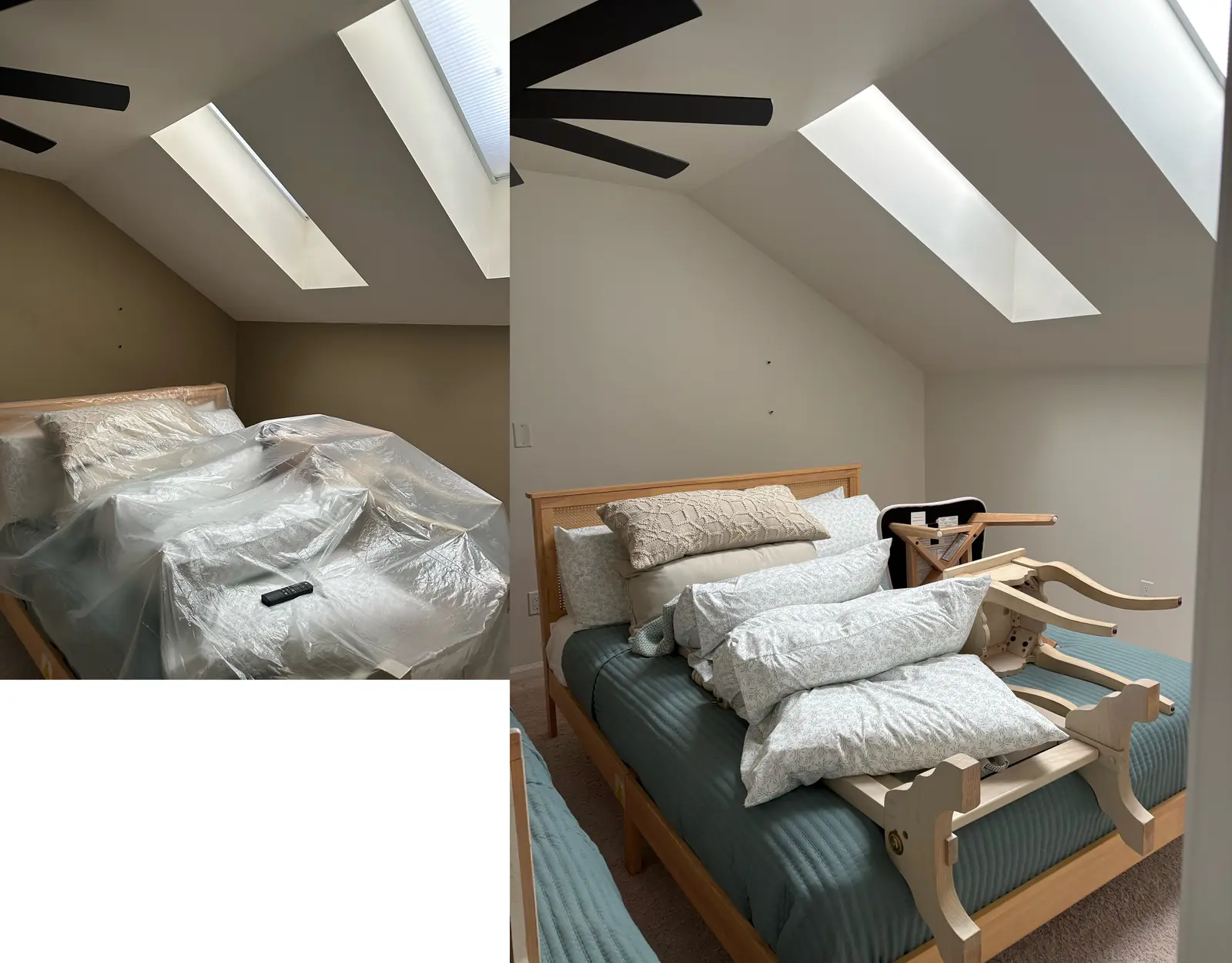
Before & After
Interior paint does not have one reliable replacement date. Its useful life depends on preparation, surface condition, the coating, cleaning, and how the room is used. Repaint when wear or appearance warrants it, and investigate recurring surface problems before covering them. A quiet bedroom and a busy hallway may need attention at very different times.
Why Room Use Matters
Hallways, entries, and walls beside chairs receive repeated contact. Guest rooms or less-used spaces may stay presentable longer. Kitchens and bathrooms also need their surface conditions and cleaning needs considered when choosing a coating and deciding whether to repaint.
In a Lake of the Ozarks home, calendar age can be a poor measure of wear. A seasonal property may have long quiet periods followed by busy visits, while a year-round household uses the same spaces daily. Inspect the actual rooms instead of applying one schedule to the whole home.
Which rooms tend to need attention sooner?
Rooms with more contact, cleaning, or moisture exposure deserve closer inspection than low-use spaces. These are relative planning priorities, not fixed repaint intervals.
| Room or surface | What affects durability | What to inspect |
|---|---|---|
| Bedrooms | Daily use, furniture contact, and changes in room purpose | Bedside marks, moved-furniture outlines, and isolated patches |
| Hallways and entries | Frequent hands, bags, and passing traffic | Persistent scuffs, worn corners, and shiny rubbed areas |
| Kitchens | Cooking residue, splashes, and repeated cleaning | Finish changes near work areas and marks that remain after appropriate cleaning |
| Bathrooms | Moisture conditions and surface maintenance | Peeling, bubbling, or returning stains that need review |
| Ceilings | Usually less direct contact than walls | Discoloration, cracking, or surface changes rather than ordinary hand marks |
| Trim and doors | Repeated handling, impact, and cleaning | Chipped edges, worn areas near handles, and damage at contact points |
A home's walls, ceilings, and trim do not need to be repainted on one shared schedule. Separate them in your inspection and estimate so sound surfaces are not automatically included because a busy hallway needs attention.
Appearance and coating condition are separate questions
An intact finish may still need a color update after new flooring or furniture. Conversely, a color you still like may be on a surface with visible wear. Decide whether your reason for repainting is cosmetic preference, damage, or both; that helps define the work.
Preparation and Product Choice Affect the Result
Old patches, uneven texture, and poorly prepared areas can remain visible through a new finish. Point out those conditions before estimating. Lake Painters offers drywall repair and preparation, with sanding and primer needs discussed according to the surfaces. Manufacturer preparation guidance also calls for cleaning surfaces, addressing mildew, sanding rough or failing paint, allowing surfaces to dry, and priming where appropriate.1
Select a product and finish for the room and substrate. Consider cleanability and the look you want together. A sheen name alone does not tell you everything about a coating's performance, so discuss the actual product rather than assuming all paints with the same sheen behave identically.
What can shorten interior paint life?
Repeated abrasion, unsuitable cleaning methods, unresolved moisture, and weak underlying surfaces can all undermine the expected result. Skipping needed preparation or choosing a coating without considering the room's use can also create problems that age alone does not explain.
Discuss recurring wear at its source. Moving a chair away from a wall may reduce contact; repainting that spot without changing the contact will not prevent it happening again. Where bubbling or stains return, investigate the surface condition rather than simply choosing a new color.
Cleaning and Maintenance Need the Right Timing
Follow the product guidance for cleaning and allow the specified curing time after painting. Ask when furniture can return near walls and when routine cleaning can begin. Avoid assuming a surface that feels dry is ready for every kind of contact.
Keep a record of the product, color, sheen, and room for future maintenance. Leftover paint information can help identify the original finish, although it does not guarantee a touch-up will blend into an older surface.
Check Condition Before Planning a Repaint
- Inspect busy walls in daylight and evening light.
- Note marks that remain after appropriate cleaning.
- Compare old touch-ups with the surrounding finish.
- Record peeling, cracks, or recurring stains for review.
- Decide whether adjoining rooms need coordinated colors.
If several areas show wear, request a room-by-room scope. If only one area needs attention, ask where a repaint should stop for a consistent result. Residential interior painting [blocked] can be planned around your surfaces and access needs.
When is a touch-up enough?
A touch-up may suit a small isolated mark on an otherwise sound surface when an acceptable match can be achieved. It is less useful when multiple patches, widespread wear, or noticeable sheen differences already make the wall uneven.
For a highly visible wall, discuss repainting from corner to corner or between other natural boundaries. This gives the scope a clear stopping point without assuming the whole room needs painting. Match expectations to the existing texture, color, and lighting; having the original paint does not guarantee an invisible repair.
Frequently Asked Questions
How long does interior paint last in a rarely used room?
There is no fixed interval. Inspect its condition, any surface problems, and whether the color still suits the room. Low use alone does not establish a guaranteed lifespan.
Does peeling mean the paint is simply old?
Not necessarily. Surface preparation, moisture, or coating compatibility may need review. Describe the location and history so the next step addresses the condition rather than only the appearance.
Is paint lifespan the same as a workmanship warranty?
No. A warranty has specific terms and is not a prediction of how long every surface will remain unchanged. Ask about applicable terms separately from maintenance and repaint planning.
Should ceilings be repainted whenever walls are painted?
Not automatically. If a ceiling is sound and its appearance still works with the new wall color, discuss leaving it outside the scope. Note stains, cracks, or unevenness separately for review.
How can I get a useful durability expectation for my rooms?
Ask about the proposed product, preparation, cleaning guidance, and your room's actual use. Those details support a more useful maintenance discussion than a single lifespan number applied to every surface.
Plan Based on Your Home
Share the rooms, visible wear, known repairs, and timing with Lake Painters. A free estimate helps turn those observations into a clear interior painting scope.
Plan an Interior Repaint [blocked]